Can Making Changes To My Home Actually Change Me?
How Your Relationship With Home Becomes A Vehicle For Change
Perhaps you’re more familiar with the idea that creating change in our lives must start with us. Practices like therapy, mindfullness and life coaching encourage us to work from the inside out. If something isn’t right with us, we need to change our thinking, our behaviour, our mindset first.
But what if there’s another way in?
I’ve noticed something rather curious about myself. Whenever a shift in my life is imminent – even just beginning to peep over the horizon – I instinctively start moving things around at home. Furniture, pictures, objects – items that have been perfectly happy in one place suddenly seem to want to be somewhere else.
It’s as though my home is preparing for change in advance of me knowing fully what that change is going to be. And I’ve heard similar accounts from others.
This is one of the fascinating principles at the heart of Environmental Therapy.
By making changes to our external environment, we can create the conditions for change to find us.
Here’s how it flows
Rather than always working from the inside out, we can work from the outside in.
We are not separate from our surroundings. We are in continuous relationship with them, affecting and being affected by the places we inhabit.
In Environmental Therapy, I understand this relationship through three separate but interconnected perspectives.
1. Energetic
In Feng Shui and other Eastern traditions, chi is the life-force energy that circulates through all living things and their surroundings.
The intention with these practices is to encourage the harmonious flow of chi, preventing it from becoming stagnant, obstructed or excessively accelerated.
Think of the difference between walking into a room that feels dull and lifeless and one that feels fresh and alive. You may not know what accounts for the difference, but you can certainly feel it: the chi isn’t flowing.
2. Psychological
Our nervous system is continually taking in information from our surroundings, much of it without our conscious awareness. The longer we live somewhere, the less likely we are to notice what has become all too familiar.
A room can communicate:
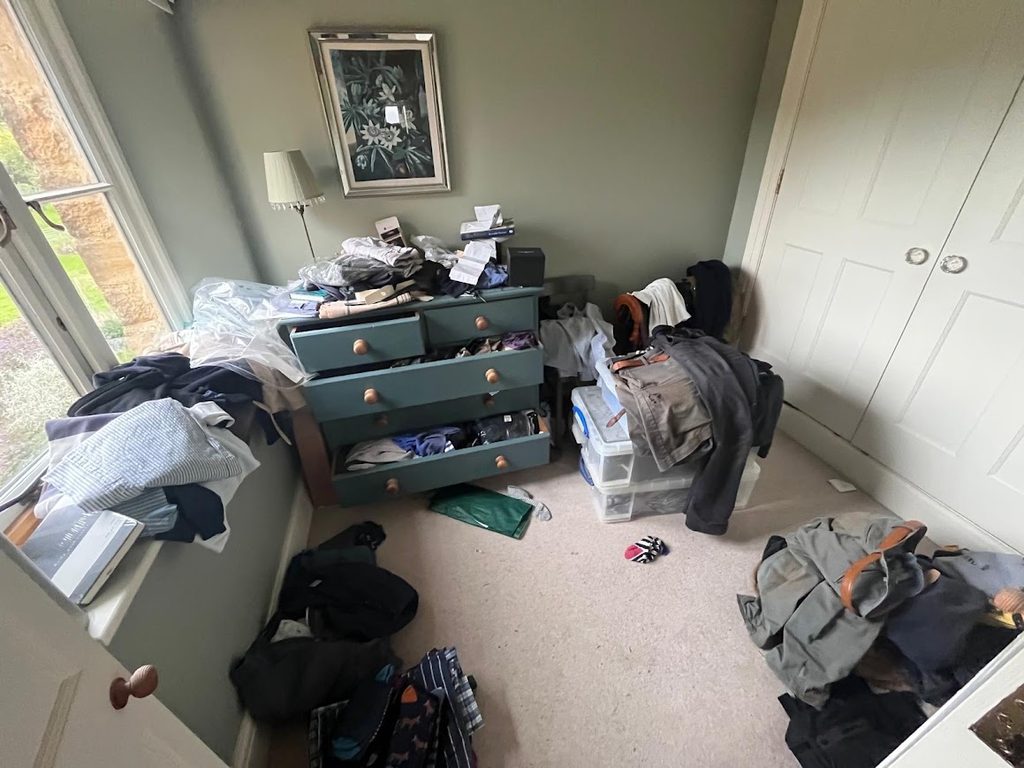
I am unfinished. Neglected. Chaotic. Overloaded.
Or it can communicate:
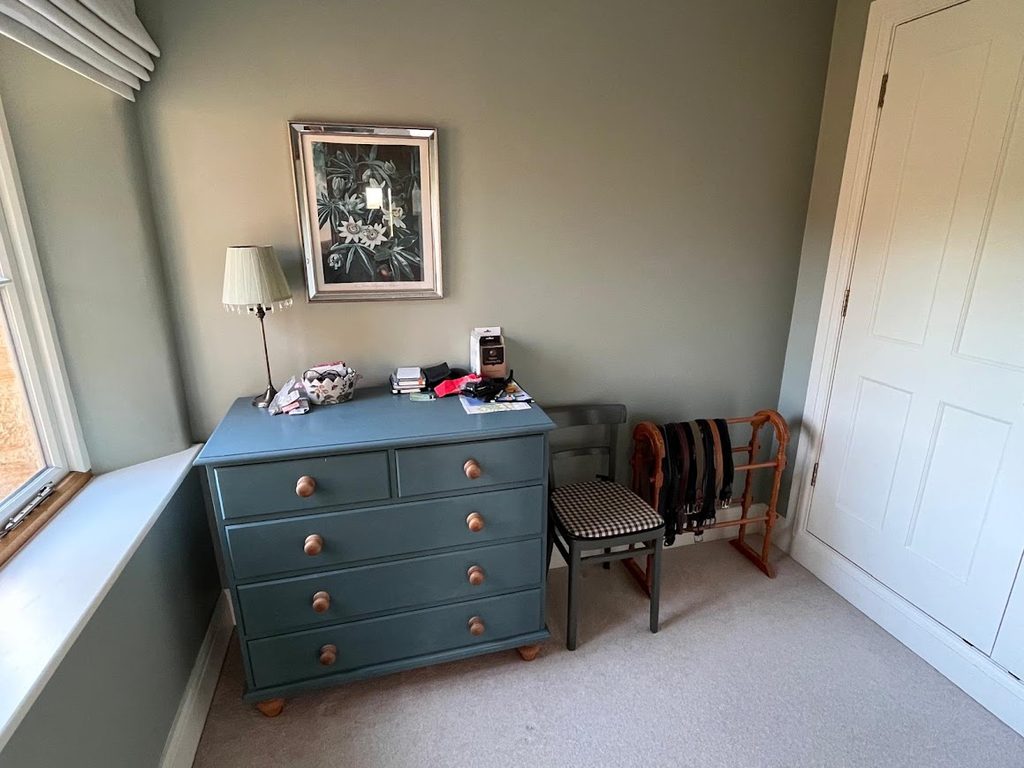
Welcome home. Relax. You belong here. You are loved.
Both affect how we feel.
When the messages from our surroundings are repeatedly negative, they make subtle but persistent demands on our attention, adding to our sense of stress or unease.
Conversely, a home that feels cared for can encourage us to settle, restore our energy and help to refresh our creativity.
3. Reciprocal
Here’s where the relationship with home is particularly significant.
Our inner state of mind can manifest itself outwardly. When we’re overwhelmed, distracted or anxious, we may become disconnected from ourselves and less attentive to our surroundings.
And sometimes our home wears this disconnection like a set of clothes.
The piles of stuff we never get around to dealing with. The rooms we avoid. The broken things we continue to live with. The possessions that hang around belonging to an earlier chapter of our lives.
Not every untidy room tells a deeper story, of course. But sometimes what we see around us reflects something we’ve stopped noticing is happening to ourselves.
So here’s the opportunity.
Rather than waiting until we feel differently before feeling able to make changes, we can begin with the home and allow those changes to go to work on us.
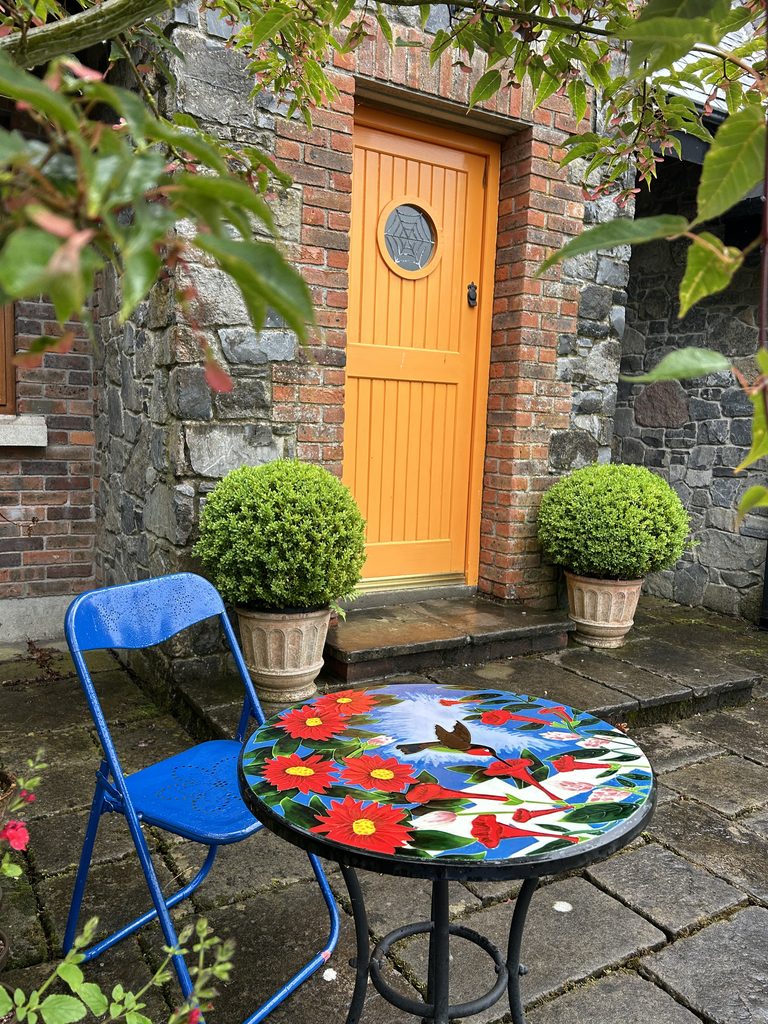
Front door
Let’s take something as ordinary as your front door. Open wide.
In Feng Shui, the entrance to the home is known as the mouth of chi. It’s where energy enters before circulating throughout the home. But it’s also, quite literally, the threshold you cross when you leave the outside world behind and retreat to your own inner sanctuary.
Now imagine that every time you come home you are greeted by an accumulation of shoes, coats, bags, recycling boxes – all those things waiting for your attention to move them on.
Nothing disastrous in itself. But each is an obstacle that makes a tiny, repeated demand on your attention.
Deal with me. Move me on. Sort me out. You may barely register these messages as you fly in and out of the door. But some part of you is registering them nonetheless.
Now imagine something different.
You’ve cleared the entrance, found homes for the things that don’t belong there, perhaps added something beautiful or welcoming. Something that makes you feel happy to be home.
Instead of being greeted by demands, you’re greeted by a sense of arrival.
Welcome home. Come on in. All is well. Notice the difference?
My invitation
Give your mouth of chi some loving attention, then watch what happens over the next 21 days.
Notice how you feel when you arrive home. Whether your mood lifts. Whether you feel more motivated to care for other parts of the house. Whether those you live with respond differently too.
And perhaps notice whether anything else begins to shift in your life.
You may discover that the care and attention you’ve bestowed upon your home is finding its way back to you in a circle of reciprocity.
Building a therapeutic alliance
You can enter this relationship through any of the three doorways – energetic, psychological or reciprocal. They are interconnected.
But what makes Environmental Therapy particularly empowering is that we don’t always need to begin by changing ourselves. We can begin with the place in which we live and wait for our outer world to catch up..
By recognising and responding to the needs of our home first, we create the conditions in which the home can better support our own.
This is what I call the therapeutic alliance between person and place, sitting at the heart of Environmental Therapy– a relationship in which care, attention and reciprocity can become catalysts for healing, growth and transformation.
When we change the conditions around us and allow the affect to ripple inwards, who knows what goodness might happen next, what relationships transform?
From the warmth of my hearth to yours, Mary
Home is where the Hearth
My new book, Hearth, pays tribute to the blessing of having a home and why creating sanctuary at home can help our lives to flourish.
 |